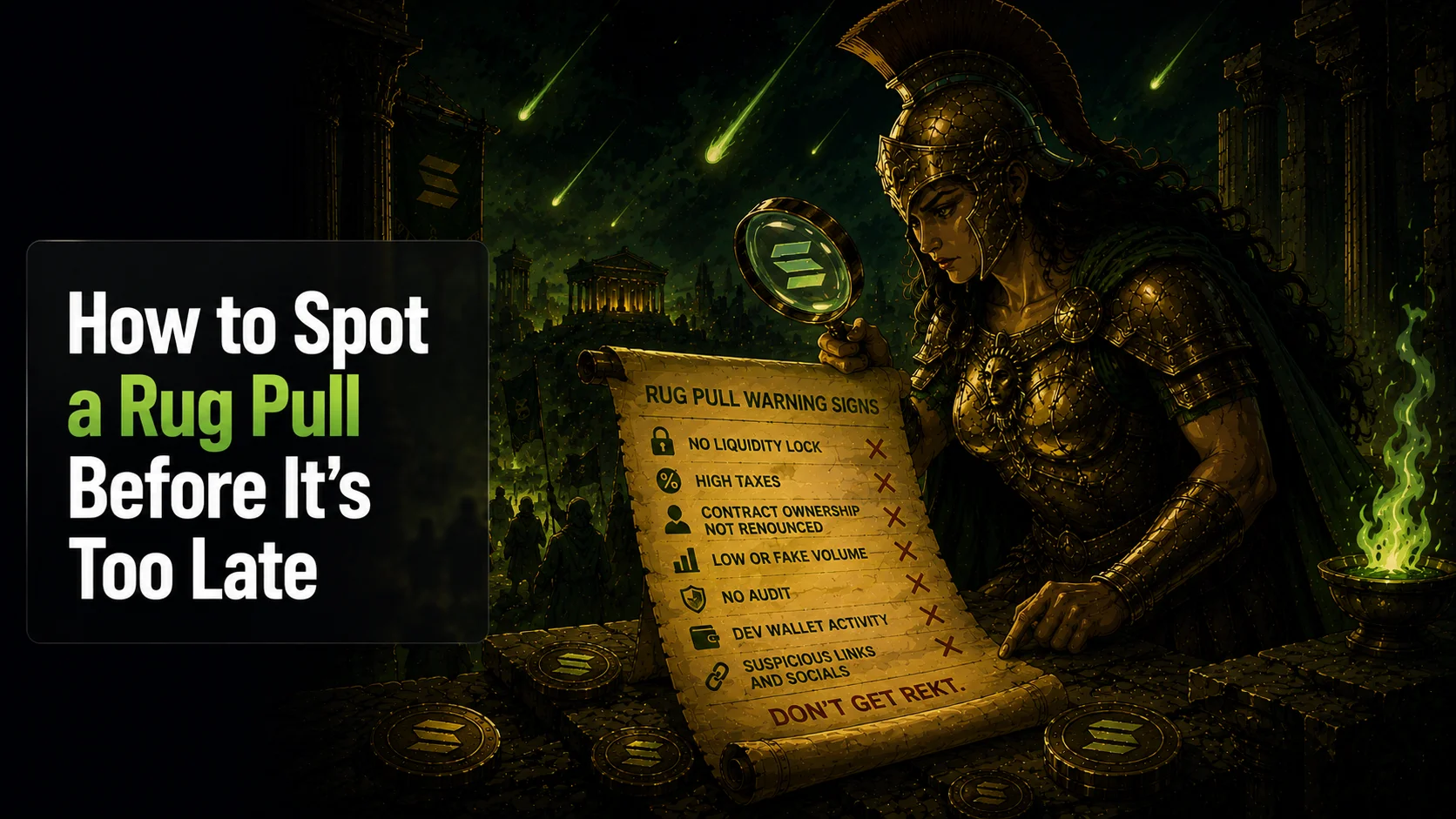
Rug pulls remain one of the most common threats in the Solana memecoin ecosystem. While the space has matured, bad actors continue to evolve their techniques. Here's how to spot the warning signs before you ape in.
1. Check the Liquidity Pool (LP)
The single biggest indicator of a potential rug pull is locked vs. unlocked liquidity. If a team can pull LP tokens from the pool at any time, they can drain the entire project in seconds.
Always verify:
—Is liquidity locked? Use Solscan or DexScreener to check the LP wallet.
—How long is the lock period? Anything under 6 months is a yellow flag.
—Who holds the LP tokens? If it's a single wallet with no lock, do not enter.
2. Mint Authority Still Active
If a token's mint authority has not been revoked, the creator can mint unlimited new tokens at any time. This is the most common rug vector on Solana.
Check via Solscan:
—Go to the token page, then "More", then "Mint Authority"
—If it shows anything other than "Disabled" or "Revoked," the supply can be inflated at will.
3. Honeypot Detection
A honeypot contract allows buying but prevents selling. While Solana makes true honeypots rarer than on Ethereum, they still exist, usually through custom programs with transfer restrictions.
Signs include:
—Transactions consistently fail on sell attempts
—The token's sell tax is significantly higher than buy tax
—Transfer hooks with unusual logic in the program
4. Unusual Holder Distribution
If a single wallet (or cluster of wallets) holds more than 50% of the supply, the price can be dumped at any time. Use holder clustering tools to identify grouped wallets that may belong to the same entity.
Watch out for bundled supply at launch. A bundler percentage above 20% is a red flag. It means the deployer controlled most of the initial supply and distributed it across side wallets to appear organic.
5. Developer History
Before investing time in any token, check if the deployer wallet has been associated with failed or rugged projects in the past. A clean deployer doesn't guarantee safety, but a dirty one guarantees risk.
Key things to check about the dev wallet:
—Did the dev keep tokens at launch? Over 5% is a yellow flag, over 10% is a red flag.
—Has the dev wallet sold before? Pull the on-chain history. Serial ruggers follow patterns.
—Is the dev wallet active post-launch? A dev who goes silent immediately after launch is a bad sign.
—Does the dev have a track record? Some devs have launched 10+ successful tokens. Others have 10+ rugs.
6. Wash Trading and Fake Volume
Many tokens are launched as copies of original projects. These tokens usually have a higher market cap and volume compared to the original token and show up first in search.
Never get deceived by such tokens. They are pumped artificially with volume bots. The buys and sells are fake, and you can identify this from the chart and the fees.
Wash traded tokens have distinctive chart signatures:
—Perfectly vertical green candles with no wicks (organic buying never looks this clean)
—Volume spikes with zero price impact (buys and sells cancel each other out exactly)
—Price channels that oscillate robotically (algorithmic, not human)
—Sudden liquidity removal after a pump (the classic rug shape)
If a chart looks too perfect, it probably is. Real tokens are messy. Organic buying and selling creates imperfect, jagged price action.
How Athena Alpha Helps
Athena Alpha surfaces all of these signals automatically, from LP status to deployer forensics, holder clustering, honeypot detection, and wash trading analysis. It has been trained on 5,000+ wash-traded, fake-pump, and honeypot tokens over a span of months. Paste a contract address and get answers in seconds.